












Get ready, Year 4! Our new class book is The Firework-Maker’s Daughter by Philip Pullman.
It’s a thrilling adventure filled with danger, determination and dazzling discoveries. The story follows Lila, a brave girl who dreams of becoming a firework-maker, even when everyone tells her she can’t. To prove herself, she sets out on a perilous journey to Mount Merapi, facing fierce challenges and learning what true courage really means. Trust me — this story will light up your imagination like a sky full of fireworks!

 Spell with Emile
Ready for Superhero Maths?
Use the Wonder Woman timer, and choose a superhero to test yourself over a set period of time. To truly be a hero, try to answer all questions in less than 5 minutes. Superheroes can do it in 4! However, even managing to get all the questions correct on your own in any time limit is a success. Good luck!
 Batman x2 x5 x10
 Hawk Girl x3 x 4
 Thor x6 x7 x8
 Black Widow x9 x11 x12
 Superman Division (All)
 Iron Man 2 digit x 1 digit
 Hulk Smash (Various!)


BE WORD AWARE
To help new words stick in your long-term memory, use the Word Aware rap.
Choose a word from your weekly spelling list, and join in with the rap.
Think about…
What does it start with?
How many syllables does it have?
What does it rhyme with?
Can you put it in a sentence?
Share new words with your class.
VIEW OUR
Home Learning
Exercise your “Learning Powers!”. Love learning? Click the button.
 Remote Home Learning
WELCOME TO
Year 4
Welcome to the Year 4 class page! Our team are Mr Bebbington and Mrs Fordyce.
- Spellings & Times-tables: tested on Fridays
- Homework: Try to do all of the tasks each half-term, but not all at once 😉 Spread it out over the weeks.
- PE Days: PE Kit on Thursdays and Fridays
- Manchester Museum Trip: June 16th
- Sports Day: June 17th
Remember to read several times a week and record in diaries. These should be brought into school every day.
Homework books should be brought in when ready on a weekly basis to help you keep on track.
YEAR FOUR
Curriculum
Summer Term English
In English this term, we will begin exploring Beowulf, one of the oldest and most famous stories from Anglo-Saxon literature. This exciting tale of bravery, monsters and heroic deeds will give pupils rich opportunities to develop their narrative writing. We will use the characters, settings and dramatic events within the story to inspire our own writing, with a particular focus on atmosphere, description, tension, characterisation and ambitious vocabulary choices. Alongside this, we will continue to build confidence and accuracy in SPaG, revisiting key word classes such as nouns, verbs, adjectives and adverbs, and exploring how careful language choices can strengthen meaning and impact.
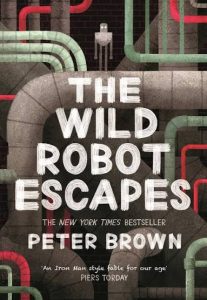
We will also use our class reader, The Wild Robot Escapes by Peter Brown, to support wider reading and discussion. Through this text, pupils will consider themes such as survival, identity, friendship and belonging, while continuing to develop thoughtful responses to characters and events.
Guided Reading
In Guided Reading, our texts will link closely to our Vikings topic. Pupils will explore a range of fiction, non-fiction and poetry, including information texts about Viking life, raids, longships, settlements, beliefs and exploration. Through these texts, children will continue to practise key reading skills such as retrieval, inference, vocabulary understanding, prediction and summarising. They will also learn to recognise how writers organise information, create atmosphere and choose language to interest and inform the reader.
This work will help pupils deepen their understanding of the Viking period while strengthening their ability to read carefully, discuss ideas clearly and compare different types of texts.
Summer Term Maths
In Maths this term, we will continue to develop pupils’ confidence, accuracy and reasoning across a range of important Year 4 topics: decimals and money, geometry, statistics and time.
We will begin by building on our understanding of fractions as we move into decimals. Pupils will learn to recognise tenths and hundredths, make links between fractions and decimal numbers, compare and order decimals, and round decimals to the nearest whole number. We will then apply this knowledge to money, working with pounds and pence, converting between units, and solving practical problems involving addition, subtraction and giving change.
Later in the term, our focus will shift to geometry. Children will explore angles, shapes, symmetry and position, learning to identify and compare properties with increasing accuracy. They will also use mathematical vocabulary to describe shapes and explain their reasoning.
We will also revisit statistics, where pupils will interpret and present information using charts, tables and graphs. They will answer questions about data and begin to draw simple conclusions from the information shown.
Towards the end of the term, we will focus on time. Pupils will practise reading, writing and converting time between analogue and digital clocks, including 12-hour and 24-hour time. They will also solve problems involving durations, timetables and real-life time contexts.
Finally, we will explore statistics. Pupils will learn how to interpret and present data using bar charts, pictograms and tables. They will answer questions using data, compare results, and draw conclusions, developing their confidence in reading and understanding information presented in different ways.
Summer Term Science
In Science this term, our main focus will continue to be Sound, in line with the Year 4 programme of study. Pupils will explore how sounds are made, learning that sounds are created by vibrations and that these vibrations travel through different materials to reach our ears.
Children will investigate how sound travels through solids, liquids and gases, and will explore how the pitch and volume of a sound can be changed. They will use musical instruments, classroom equipment and everyday objects to look for patterns between pitch and frequency, and between volume and the strength of vibrations.
We will also consider how sound is used in the real world, including why sounds become fainter as the distance from the sound source increases and how our ears help us to hear. Throughout the unit, pupils will continue to develop their scientific enquiry skills by asking questions, making predictions, carrying out practical investigations, recording results and drawing simple conclusions from their findings.
During the final half-term, we will revisit and consolidate learning from across our previous Year 4 Science topics. This will give pupils the opportunity to fill any gaps, strengthen key knowledge and revisit important vocabulary from areas such as electricity, states of matter, classification, habitats and the human digestive system. This review work will help pupils make stronger links between different areas of Science and prepare confidently for future learning.
Summer Term History and Geography – Vikings
This term, our History and Geography learning will focus on the enquiry question: Were the Vikings deadly raiders or peaceful farmers? Pupils will explore the different sides of Viking life and consider why the Vikings are often remembered as fierce warriors, while also learning about their roles as settlers, farmers, traders and craftspeople.
From a History perspective, pupils will investigate Viking raids, including attacks on monasteries, and consider why these events had such a lasting impact. They will also explore everyday Viking life, including homes, jobs, beliefs, farming, trading, longships and settlements. By comparing different types of evidence, children will begin to understand that the Vikings were not simply one thing, but a complex group of people whose lives changed depending on where they lived and what they were doing.
From a Geography perspective, pupils will use maps, atlases and globes to locate Scandinavia, including modern-day Norway, Sweden and Denmark. They will trace Viking travel routes across the seas and identify areas of Britain where Vikings raided, traded and settled. Pupils will also consider how physical geography, including coastlines, rivers, seas and farmland, influenced Viking journeys, settlement choices and ways of life.
Throughout the unit, children will develop key historical and geographical skills by asking questions, examining evidence, using timelines, interpreting maps and explaining how people and places changed over time. This topic will help pupils build a balanced understanding of the Vikings and decide for themselves whether they should be remembered as deadly raiders, peaceful farmers, or something in between.
YEAR FOUR
Times Tables
Having trouble learning your times-tables? We all like learning differently. Try TT Rockstars, Hit The Button and practising often at home.
Here for you to check out is Percy Parker and he has a song for every times-table.
Featured here for you are the x6, x7 and x9 times-tables!
Useful Spellings


Learning Links

 Times-Tables Rockstars
Knowledge Organisers
Want to recall or revise some key facts for class?
Choose a subject below, and view the 2-sided fact sheet.
Want or lost your own paper copy? Ask your teacher.
Science
 Living Things
 Animals & Humans
 Sound
Sound Electricity
 States of Matter
History
 Roaming Romans
 Vikings
Geography
 Extreme Earth
Art & Design
 Storytelling Through Drawing
 Exploring Pattern
 The Art of Display
 Mechanical Systems
 Structures
 Textiles
 Electrical Systems
 Food
Food
 Digital Worlds
MFL (French / Français)
 Colours & Numbers
 The Seasons
 Minibeasts
 Musical Instruments
 I can...
 Transport
RE
 Christianity
 Islam
Islam Judaism
Computing
 The Internet
Music
 Finish This!